Muay Thai Trip From USA: Complete 2026 Guide & Booking
US passport holders get a 60-day visa exemption for tourism under current Thai rules. That covers most two-to-four-week training trips before you need a longer-stay visa category.
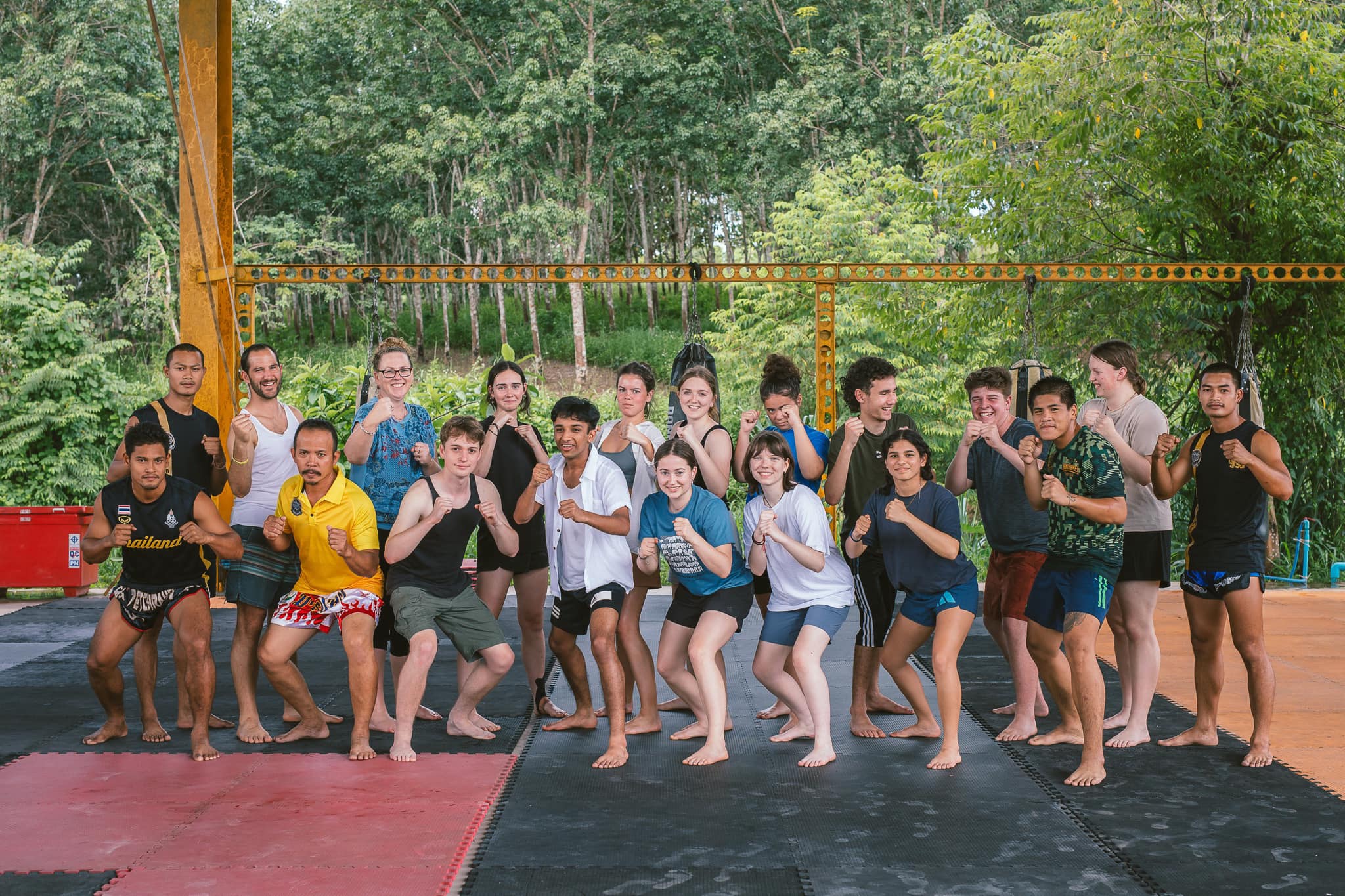
Plan day one as recovery after a long-haul flight. Technique starts on day two, not at baggage claim.
On this page
60 days
Visa exemption stay for US passport holders under current Thai tourism rules (confirm before you fly).
Why Thailand is the default Muay Thai trip from the USA
Coaching depth and cost per hour
Americans fly to Thailand for Muay Thai because daily access to Thai coaches costs less than boutique classes at home, and the sport is embedded in the culture rather than bolted onto a fitness studio.
A quality pad session in New York or Los Angeles can cost what a full training day plus lunch costs in Chiang Mai. You also get coaches who grew up in the sport, not a quarterly seminar circuit.
This guide covers the US side: airports, the 60-day exemption, USD budgeting, and arrival logistics. For camp selection, read best Muay Thai camp for beginners. For a holiday pace with rest days, see Thailand training holiday for US travelers.
Flights: where Americans land
Bangkok (BKK)
Phuket (HKT)
Chiang Mai (CNX)
Book flights before you lock camp dates if you travel in December or US spring break. Mid-week departures from major hubs often beat Friday premiums.
Check baggage allowance before you pack gloves. Economy fares vary from 1 to 2 checked bags depending on carrier and fare class.
60-day visa exemption for US passport holders
Confirm on official sources
United States citizens typically enter Thailand under a 60-day visa exemption for tourism, subject to current Thai immigration rules. Training at a commercial camp falls under tourism for visits within that window. Immigration officers care about your allowed days and proof of onward travel.
Stays beyond 60 days need a tourist visa, DTV, or another eligible category. Start with the Thailand training visa / DTV overview and verify on the Royal Thai Embassy, Washington DC.
Carry proof of onward flight, accommodation booking, and travel insurance in your carry-on. Keep your CombatStay confirmation on your phone if immigration asks where you are staying.
USD budget for a Muay Thai trip from the USA
THB reference included
Two-week ballpark (per person)
- Flights (economy return): USD 900–2,200+ depending on hub, season, and nonstop vs one-stop.
- Training: USD 200–700+ for daily drop-ins or weekly packages (roughly 7,000–25,000 THB).
- Accommodation: USD 350–1,000+ for two weeks outside ultra-budget hostels.
- Food and local transport: USD 200–500+; street food keeps this low.
- Insurance (with sports cover): USD 60–180+ for the trip length.
Total often lands USD 1,800–4,500+ before tours or fight tickets. Phuket and Bangkok sit at the top; Chiang Mai usually sits lower for the same training volume.
Ways to save
- Book weekly camp packages instead of daily drop-ins after day three.
- Stay within walking distance of the gym to cut daily Grab costs.
- Fly shoulder season (March, late October) when fares dip.
- Buy gloves and shins in Thailand instead of paying excess baggage both ways.
- Use 2026 Thailand camp cost ranges to compare cities before you convert to USD.
Compare Thailand camps with accommodation and meals
Pre-filtered for stay-and-train packages. Book instantly on CombatStay.
Photos from live gym listings. Package inclusions vary; confirm room type and meals on each profile.
Browse all stay-and-train campsBest time for Americans to train in Thailand
Seasons and US holiday windows
November–February: Thai cool season. Peak demand from US winter holidays means higher flights and fuller camps. Book early.
March–April: Rising heat. Songkran (mid-April) disrupts schedules in some cities.
May–October: Wet season on the Andaman side (Phuket, Krabi). Flights can be cheaper.
Two weeks of PTO plus a weekend bridge gives most Americans a 16-day block. Four weeks unlocks real technique change if your visa and budget allow.
First 48 hours after landing
Day 0 (arrival)
Clear immigration, grab a SIM or eSIM, transit to accommodation, eat, shower, sleep. Skip the evening session if you flew overnight.
Day 1
One afternoon session only. Tell coaches you just arrived from the US. Focus on stance and pad rhythm.
Day 2
Repeat one session. Map the commute at the time you will travel daily.
Day 3 onward
Follow the camp schedule. Add a second daily session only after sleep and food keep up.
Book your Thailand camp from the USA
Verified gyms with live pricing. Filter by accommodation and instant checkout.
FAQ
Common questions from Americans planning a Muay Thai trip to Thailand.
How much does a Muay Thai trip to Thailand cost from the USA?
A two-week trip with economy flights, mid-range accommodation, daily training, food, and local transport often lands between roughly USD 1,800 and USD 4,500+ depending on city, season, and flight timing. West Coast nonstops to Bangkok can run higher than East Coast one-stops. Compare camp packages on CombatStay, then add your airfare quote from home.
Do US citizens need a visa to train Muay Thai in Thailand?
Most US passport holders enter Thailand on a visa exemption for tourism stays up to 60 days under current rules, subject to Thai immigration policy. Training at a commercial camp is tourism for short visits. Confirm allowed stay length on the Royal Thai Embassy (Washington, DC) website before you book. Longer stays may need a tourist visa or DTV. CombatStay does not provide legal advice.
Which Thai airport should Americans fly into for Muay Thai?
Bangkok (BKK) suits most first trips: nonstop or one-stop routes from LAX, SFO, SEA, JFK, and ORD, plus easy domestic connections to Chiang Mai (CNX) or Phuket (HKT). Fly direct to Phuket if your camp is on the island. Fly to Chiang Mai if your camp is in the north and you found a fare that skips an extra domestic leg on arrival day.
How long is the flight from the USA to Thailand?
Nonstop Los Angeles to Bangkok runs about 17 hours. One-stop routes from New York or Chicago often land at 20 to 24 hours total travel time. Budget a full calendar day each way once airport time and the time-zone shift are included.
When is the best time for Americans to train in Thailand?
November through February is Thai cool season: easier morning runs in Chiang Mai and Bangkok, peak flight prices around US winter holidays. April is brutally hot. May through October is wet season on the Andaman coast (Phuket, Krabi). Pick weather tolerance before you pick a camp.
Does US travel insurance cover Muay Thai training?
Many standard policies exclude combat sports or require a sports upgrade. Read the policy for martial arts, pad work, and sparring. Declare training when you buy coverage. Do not assume your credit-card travel insurance covers gym sessions.
Bangkok, Phuket, or Chiang Mai from the USA?
Chiang Mai suits beginners and long stays: lower costs, cooler mornings November to February. Phuket suits beach access and island camps. Bangkok suits fight-night access and maximum gym choice if you tolerate heat and traffic. Match city to your camp shortlist.
Can I train on the first day after flying from the USA?
Land, clear immigration, reach your accommodation, eat, sleep. Start training the next afternoon if you flew overnight. Jet lag from the US East Coast to Bangkok is an 11-hour forward shift. Your first session should be light pad work, not a double session.
What should Americans pack for a Muay Thai trip?
Bring hand wraps, mouthguard, light training clothes, running shoes, and a universal adapter. Buy gloves and shin guards in Thailand to save luggage weight. See our Thailand combat sports packing list for the full breakdown.
How do Americans handle money in Thailand?
Cards work at camps, malls, and many restaurants. ATMs charge Thai-side fees; withdraw fewer, larger amounts. Notify your bank of travel dates. CombatStay checkout runs in the gym currency with card payment.