Thailand Training Holiday from Australia: Balance Training and Rest (2026)
Annual leave is finite. A training holiday uses four or five sessions a week and keeps the rest of the trip for beaches, food, and sleep.
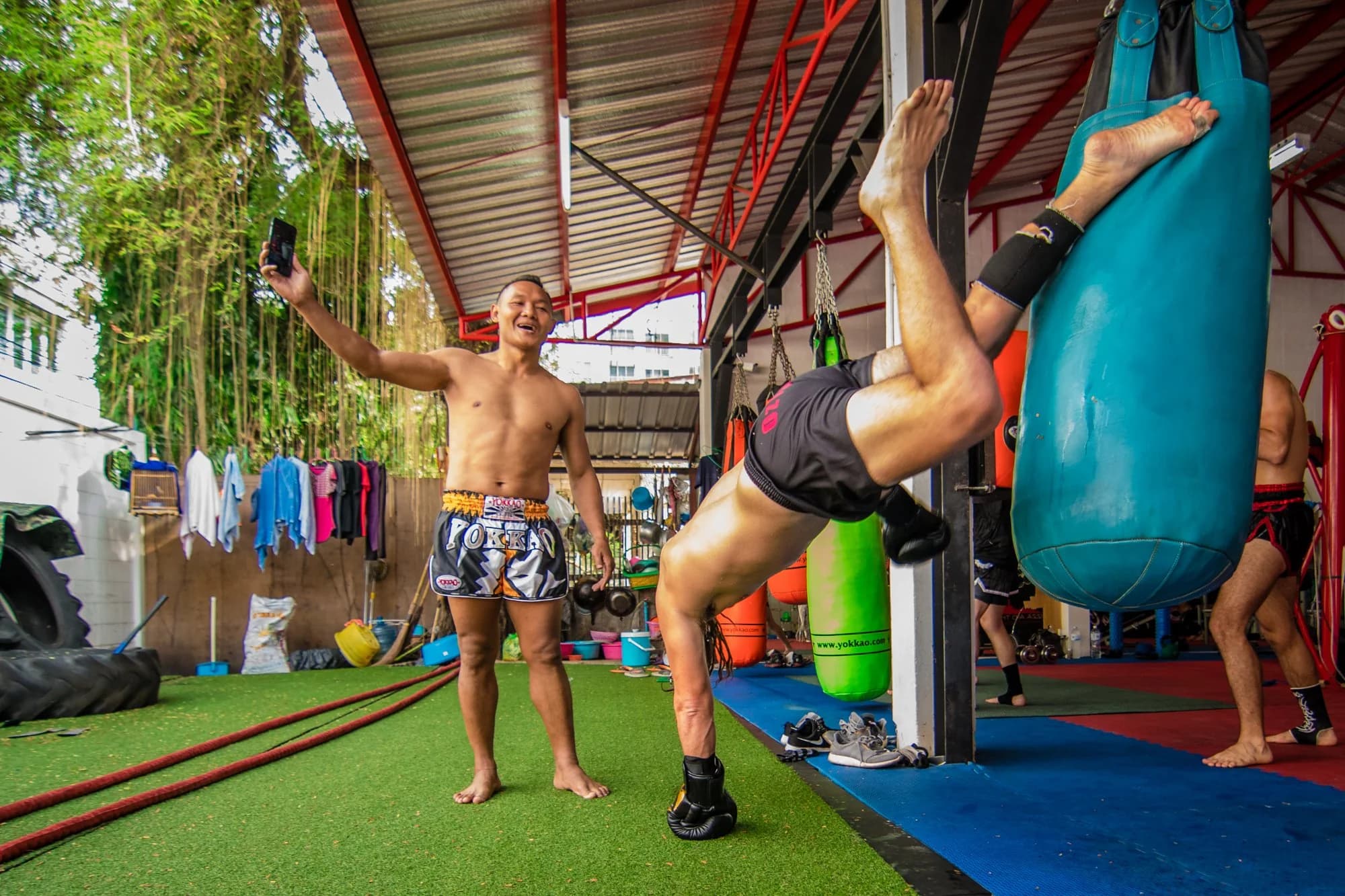
Morning pads. Afternoon swim. You fly home tired in a good way, not broken.
On this page
4–5/wk
Coached sessions per week that fit a holiday pace without wrecking the rest of your trip.
Training holiday vs full training camp
Same country, different weekly rhythm
A Thailand training holiday from Australia means you fly home with new pad skills and a tan, not with shin splits and a resentment of stairs. You train enough to progress. You leave afternoons open for the reason you picked an island or a beach town in the first place.
A full training camp block chases volume: twice-daily sessions, minimal tourism, early bedtimes. Fighters and serious hobbyists need that. Most Australians on two weeks of leave do not.
For flights, visas, and AUD budgeting, read Muay Thai trip from Australia. This page is about how you spend the days between landing and takeoff.
Annual leave math for Australians
10 days leave
Fly out Friday night, land Saturday, train from Monday. You get two weekends plus ten weekdays: roughly sixteen calendar days. Use travel days as rest, not double sessions.
15 days leave
Three-week calendar block. Enough for five training days per week, two full rest days, and a day trip or fight night in Bangkok or Phuket without skipping sleep.
Public holidays (Australia Day bridge, Easter, Queen's Birthday depending on state) stretch leave without extra days off work. Book camps early for December and January; Australian summer overlaps Thai peak season.
Best Thailand bases for a training holiday
Train hard, recover somewhere nice
Phuket
Hua Hin
Koh Samui
Chiang Mai works if you prefer mountains and night markets over salt water. Mornings are cooler November to February. Partner can do cooking classes and temple walks while you train.
City shortlists: Phuket, Hua Hin, Koh Samui, Chiang Mai.
When only one of you trains
Pick where you stay before you pick the gym
If your partner, friend, or spouse is not training, their day still decides where you can live. Do not book a gym down a side street forty minutes from the beach hotel they chose. You will skip sessions when the drive feels like a chore.
Camps with on-site pool and air-conditioned rooms work well. So does a beach hotel with a short morning commute to class. In Phuket and Hua Hin you can train before lunch and spend the afternoon at the beach.
Remote workers need desk space and stable Wi-Fi. Ask the hotel before you assume a nearby cafe will handle work calls.
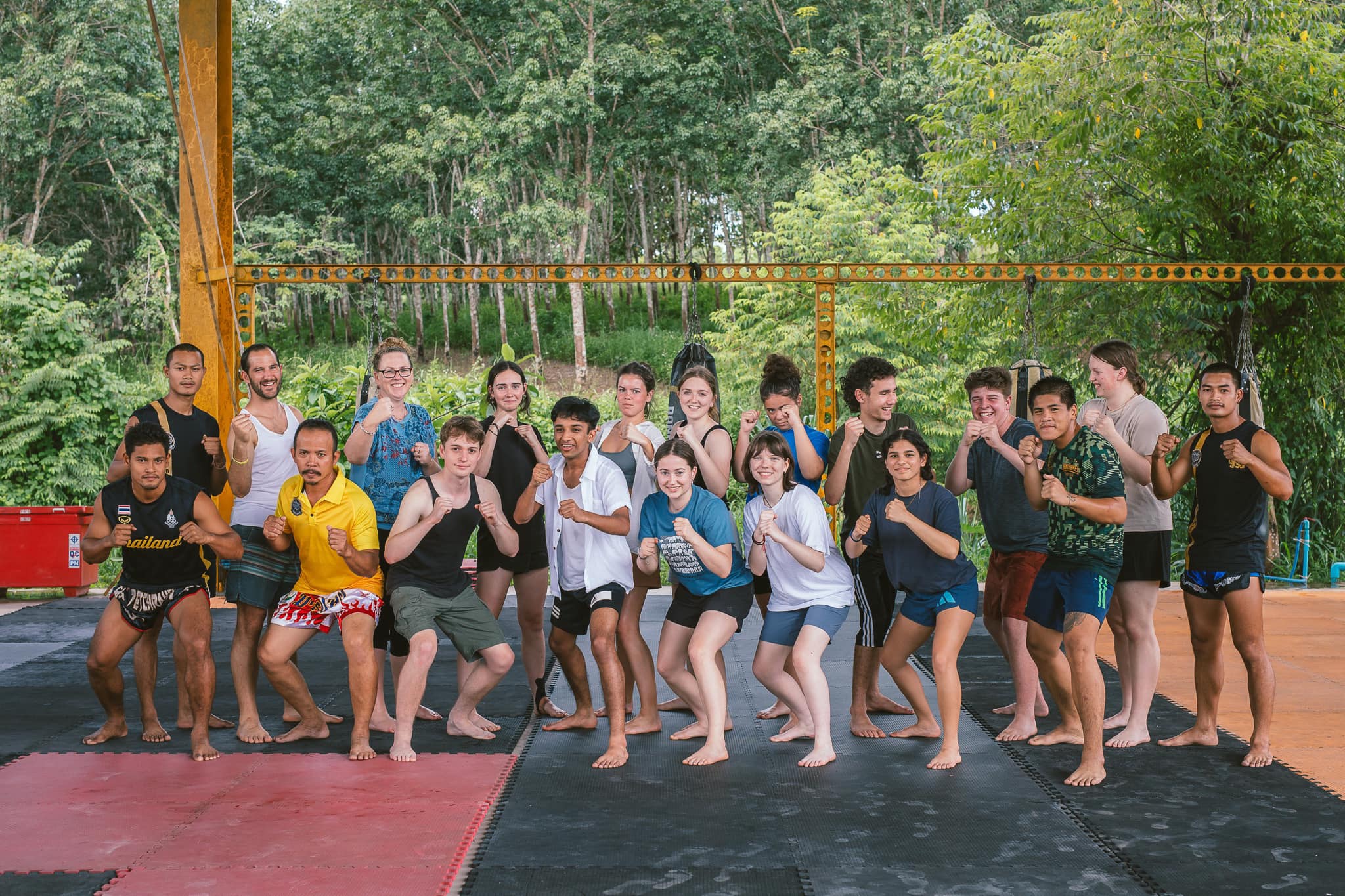
Sample training holiday week (Phuket base)
Monday: Morning pad class. Pool and lunch. Sunset walk.
Tuesday: Morning technique session. Afternoon massage. Early dinner.
Wednesday: Rest day. Island boat trip or old town food crawl.
Thursday: Morning pads. Gym sauna or ice if available. Quiet evening.
Friday: Morning class. Partner beach time. Optional stadium visit if both curious.
Saturday: Light session or open gym. Night market.
Sunday: Full rest. Sleep in. Plan next week's sessions around soreness.
Swap Phuket for Hua Hin or Samui and keep the same rhythm. Extend to ten days by repeating the pattern with one extra rest day mid-trip.
How to book a training holiday
All-inclusive camp package
Room, meals, and training in one invoice. Less decision fatigue. Works when the camp has a pool, decent beds, and walkable food if meals are basic.
Gym plus separate resort
You pick the holiday hotel; gym is a morning commute. Partner gets the room they want. Compare Grab costs and morning traffic before you commit.
Hybrid week
First half at a training-focused camp, second half at a beach resort with drop-in classes. More admin, more variety. Good for fourteen-plus-day trips.
Book on CombatStay
Filter Thailand Muay Thai listings by city, read reviews for beginner-friendly signals, confirm class times, then book packages with clear cancellation terms.
Find a camp that fits a training holiday pace
Verified listings with packages, reviews, and schedules.
Mistakes Australians make on training holidays
Booking a fighter camp for a holiday
Twice-daily mandatory sparring leaves no room for the beach. Read listing descriptions for tourist and fundamentals classes.
Stacking tours on rest days
A long boat trip plus late night out plus morning pads is a reliable way to get sick. Keep at least one slow day per week.
Ignoring your travel partner
If they are stuck at a remote villa with no footpaths or food nearby, you will skip sessions to fix morale. Book for both travelers.
Drinking most nights after training
Alcohol after evening class wrecks sleep and slows recovery. Plan two social nights, not seven.
Zero rest days because leave feels short
Six sessions in six days rarely works on a holiday trip. Four coached classes with rest days between them is enough.
Skipping travel insurance sports cover
Pad work still breaks toes even on a relaxed trip. Upgrade insurance before you fly.
Holiday pace, real progress
Four coached sessions per week for two weeks gives you roughly eight to ten quality pad classes. That is enough to fix your stance, learn a basic combination chain, and feel the sport in your body. You will not leave a stadium-ready fighter. You will leave with a skill you can train at home and a trip your partner wants to repeat.
New to Muay Thai? Pair this guide with how to pick a beginner camp and one week vs one month to set expectations.
FAQ
Thailand training holiday questions from Australian travelers.
What is a Thailand training holiday for Australians?
You book a camp or gym package, train most mornings or afternoons, and protect the rest of the day for recovery, food, beach time, or sightseeing. It is not a fighter camp block with twice-daily sessions and no rest. It fits two weeks of annual leave better than a hardcore eight-week relocation.
How many leave days do Australians need for a training holiday?
Ten working days of annual leave plus a weekend gives you 16 calendar days. Add a public holiday on either end and you can stretch to 18–19 days without burning extra leave. Book the camp for the middle block and keep travel days light.
Best Thai destinations for a training holiday from Australia?
Phuket, Hua Hin, Koh Samui, and Krabi pair gyms with beach access and restaurant density. Chiang Mai trades beaches for cooler mornings and lower costs. Bangkok suits short urban holidays with stadium nights if your partner wants city culture while you train.
Can I bring a partner who will not train Muay Thai?
Yes. Pick a base with a pool, restaurants, and easy transport. Phuket and Hua Hin work well: they can swim or explore while you do a morning class. Book accommodation with reliable Wi-Fi if they need to work from the room.
How many training sessions per week on a holiday trip?
Four to five coached sessions per week is sustainable for most holiday travelers. Take two full rest days for tours, massage, or pool time. One session per day is enough when you also want dinners out and day trips.
All-inclusive camp or gym plus separate hotel?
All-inclusive simplifies meals and commute if the camp has a pool and decent rooms. Separate hotel works when your partner wants a different area (beach vs gym street) or you found a sale on a resort. Compare total price, not only the mat fee.
Is a training holiday worth it if I am a complete beginner?
Yes, if you pick a beginner-friendly camp and cap volume. You will not fight at Rajadamnern after ten days, but you can learn stance, pad flow, and basic conditioning while still enjoying Thailand. Read the beginner camp guide before you book.
How much does a Thailand training holiday cost from Australia in AUD?
Expect similar flight costs to any Thailand trip (often AUD 800–1,800+ return economy), plus slightly higher daily spend if you eat at tourist restaurants and book tours. Training packages run AUD 300–900+ depending on inclusions. Resort-style stays push accommodation up faster than gym dorms.
Can I work remotely during a training holiday?
Many Australians remote-work from Chiang Mai or Phuket between sessions. Book accommodation with reliable Wi-Fi and desk space. Train early, work mid-day, explore late afternoon. Do not schedule client calls during pad rounds.
Training holiday vs full Muay Thai trip from Australia?
A training holiday leaves room for rest days, shared meals, and time outside the gym. A full training trip chases volume with repeat sessions and camp immersion. Same country, different weekly rhythm. Logistics for flights and visas are covered in our Australia-to-Thailand trip guide.
Book a Thailand training holiday
Compare camps by city, package type, and guest reviews.